
The Woodlands City Directory Collections
No complete official city directory for The Woodlands was located. That result fits the area’s history: it began as a planned community in 1974 and is served by a Township rather than an incorporated city clerk. The most clearly documented nearby run is for Conroe. It is a regional starting point, not proof that every Woodlands household was listed. The table separates confirmed material from useful companion sources so a researcher can record what was actually consulted.
| Collection or source | Documented years | Where it is kept | How to use it |
|---|---|---|---|
| Conroe city-directory holdings | 1984, 1988, 1990, 1992 | Texas State Library and Archives Commission | Austin reference reading room only |
| MCMLS local-history collection | Coverage varies by catalog item | Genealogy & Preservation Center, Conroe | Catalog, vertical files, maps, and appointment help |
| Dallas directory page | 1956 | UNT Portal to Texas History | Nonlocal formatting sample, free online |
| Historical Courier archive | 1925-1983 | MCMLS historical resources | Companion name and event research |
There is no confirmed publisher, edition detail, or exact Woodlands run to fill the gaps between those Conroe years. A missing hit can reflect a different postal name, a regional coverage choice, or a volume that was never acquired. Record the book title, page, edition year, and the place name printed in the volume before drawing a conclusion.
For a first local stop, the Mitchell Library is at 8125 Ashlane Way, The Woodlands, Texas 77382, with 936-442-7728 listed. Kevin Brady Library is at 2250 Buckthorne Place, The Woodlands, Texas 77380, with 936-442-7727 listed. Both branches list Monday through Thursday hours of 9 to 8, Friday and Saturday hours of 9 to 5, and Sunday closure. They are practical places to ask about catalog access, while the dedicated Genealogy & Preservation Center is the documented local-history collection.
Conroe City Directories Near Woodlands
The Texas State Library and Archives Commission city-directory holdings identify Conroe editions for 1984, 1988, 1990, and 1992. The public holdings page does not identify a publisher or an exact The Woodlands edition. TSLAC makes this material available in its Austin reference reading room. Its staff cannot search or transcribe entries by phone or email, so a visit or a researcher working on site is the documented access route.
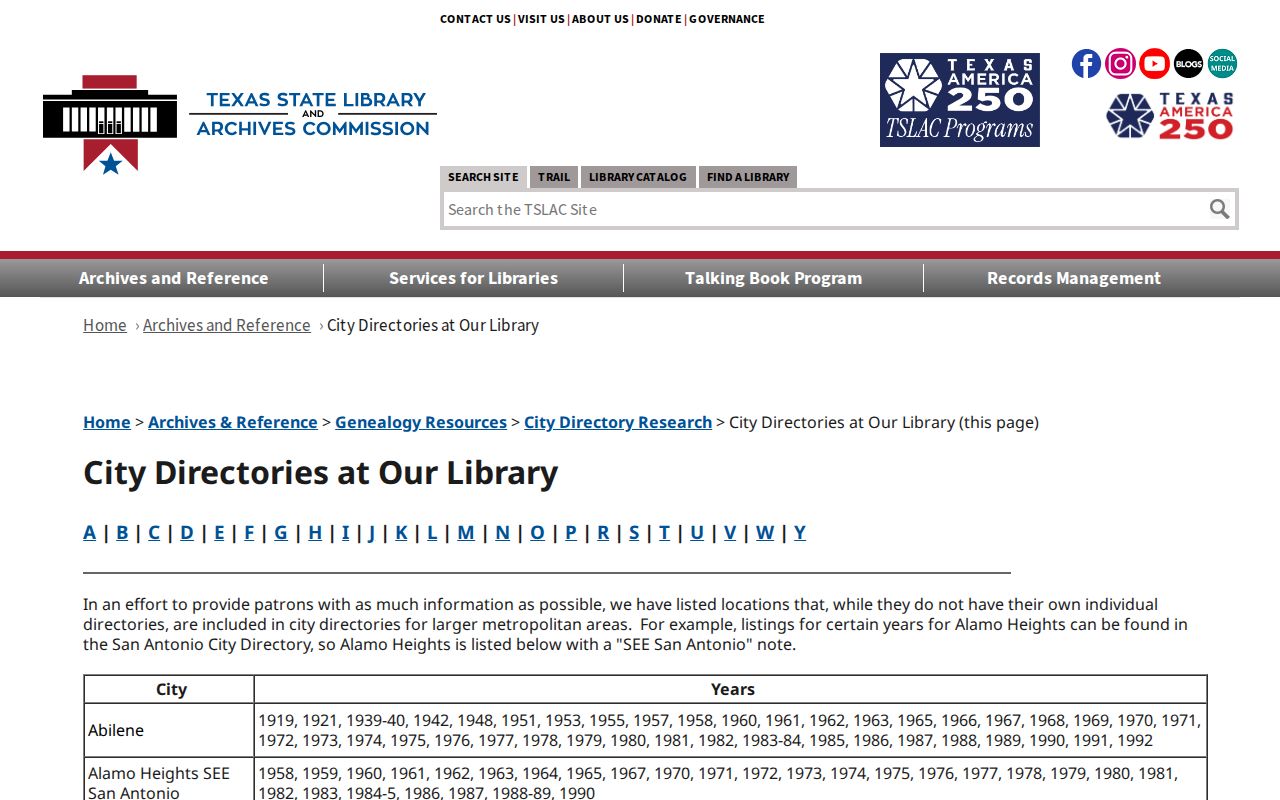
The holdings display is a useful first check because it distinguishes a confirmed Conroe volume from an assumed Woodlands listing. Use the regional books with telephone directories, contemporary news coverage, and parcel chronology when a person or street does not appear.
Why Woodlands Lacks a City Directory
The Woodlands Township is a special-purpose local government, not a conventional incorporated city. It has municipal-level services, but research found no incorporated-city clerk directory or municipal resident roll. The community also crosses county lines: most of the area is in Montgomery County, while Creekside Park is in Harris County. A familiar “The Woodlands” place name therefore does not select one historical custodian.
For a dated household question, start with the collection closest to the time period, then confirm the parcel’s county and village. Township meeting records, association elections, covenant files, and permit activity can provide public civic or property context, but none is a complete list of people who lived in a village.
The Woodlands City Directory Shelf
The MCMLS Genealogy & Preservation Center offers the strongest local fallback when a directory is not online. Founded in 1976, it reports more than 40,000 physical items and more than 200 maps, along with local vertical files, books, periodicals, and wider genealogy material. In its catalog, choose “MCMLS Genealogical & Local History Room” first, then narrow by Keywords, Title, Author, Subject, Series, or ISBN.
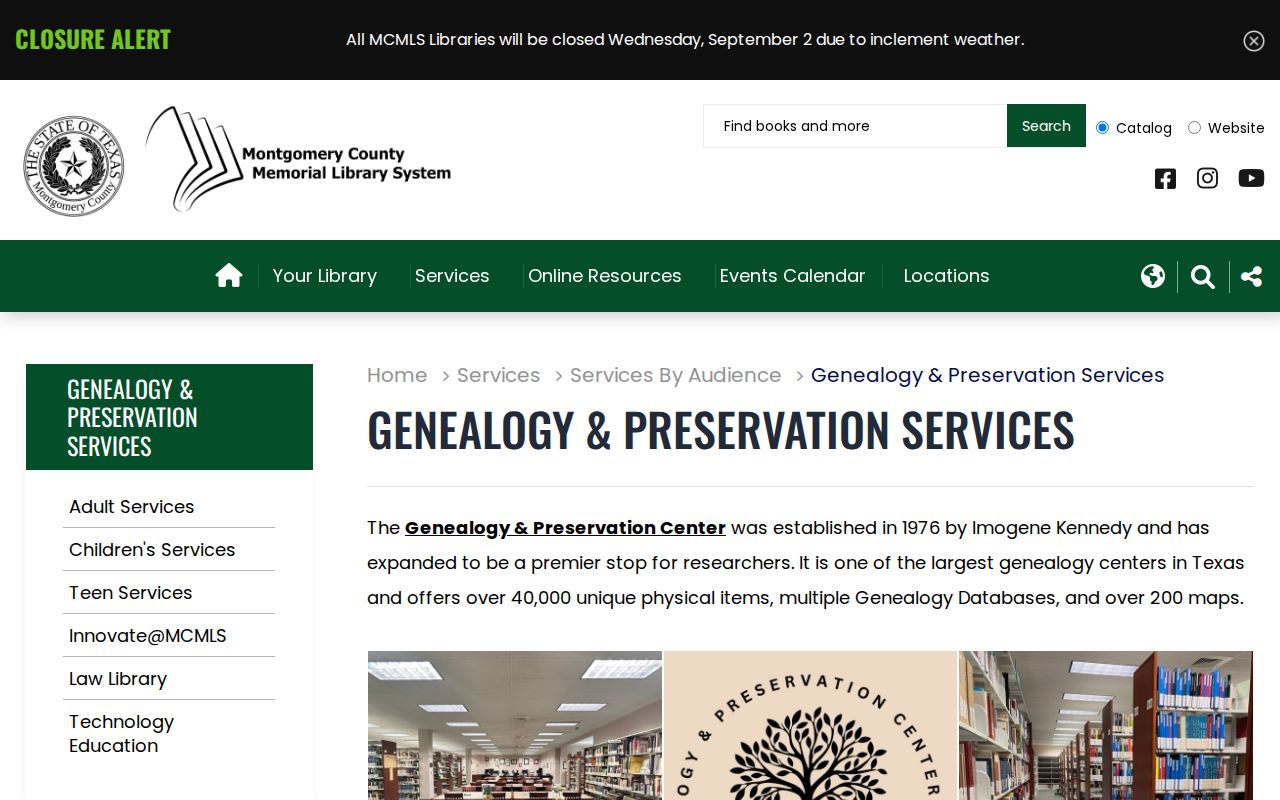
The center is at 104 I-45 N, Conroe, Texas 77301, and lists 936-522-2138. Listed hours are Monday through Thursday, 9 to 6; Friday and Saturday, 9 to 5; Sunday closed. Its 45-minute genealogy appointments can help with family trees, FamilySearch accounts, and unresolved family questions. Ask about a surname, subdivision, village, or institution rather than assuming a general directory has a Woodlands section.
Directory Format, Not Local Evidence
The UNT Portal to Texas History’s 1956 Dallas directory page is a real digitized page that shows why a scan is often more useful than a bare name index. It displays abbreviated lines, names in parentheses, address lines, and occupation or business-affiliation text. It is not a Conroe or The Woodlands record. Use it only to learn the visual conventions likely to appear in similar printed directories.
The page demonstrates the value of keeping an abbreviation key with the citation. It does not establish that a person was in The Woodlands, Montgomery County, or a particular address. For local evidence, seek a documented regional edition or a primary county and Township record from the relevant date.
Read Woodlands Historical Entries
TSLAC’s directory research guide says that historic entries commonly include a name, address, telephone number, spouse, occupation, and a tenure notation. Not every edition provides every field. Read the edition’s own abbreviations before treating a short mark as an ownership or household relationship fact. An entry identifies what that volume printed for that year, not a complete biography.
| Name | Usually the indexed person or householder; keep initials and spelling as printed. |
|---|---|
| Address | A dated street address that can be compared with a parcel or plat record. |
| Telephone | A number sometimes printed in the edition, subject to the volume’s own format. |
| Spouse or occupation | Context that can help separate people with the same name, when present. |
| Tenure notation | A mark described by that particular volume; do not assume its meaning without the key. |
- Criss-cross directory
- A later directory section arranged by street and number instead of by surname.
- Householder index
- An index focused on the named household contact, which may omit other people at the address.
- Abbreviation key
- The volume’s explanation of its shortened labels; photograph or transcribe it with the cited page.
The Woodlands Directory Time Line
Dates decide which shelf has the best chance of helping. Montgomery County archival material reaches back to the nineteenth century, but The Woodlands’ own development record begins in 1974. The Township’s current structure began in 2010. That sequence explains why a house-history search may move from old county material to development, covenant, and village records rather than finding a single municipal directory series.
| 1838 onward | County deed, marriage, probate, and related Montgomery County archival series begin in documented inventories. |
|---|---|
| 1925-1983 | The historical Courier archive can add dated newspaper context. |
| 1974 | The Woodlands began as George P. Mitchell’s planned community. |
| 1984-1992 | Confirmed TSLAC Conroe city-directory years: 1984, 1988, 1990, and 1992. |
| 2010 | Governance operations transitioned to the present Township structure. |
Trace Families With Woodlands Directories
A family-history search works best as a dated sequence, not a one-name search. Each source may use a different postal city, and a name can repeat across Montgomery and Harris counties. Preserve the exact form of the name, the page or image reference, and the location printed by the source. The following workflow makes a directory find easier to test without presenting an old entry as a present-day residence.
- Search the MCMLS catalog and local vertical files by surname, subdivision, street, village, and institution.
- Check a confirmed Conroe directory year and record the edition year and page, whether or not the surname appears.
- Follow the name through later available editions, noting address and spelling changes rather than merging same-name entries.
- Pair directory dates with the relevant census decade and the historical Courier archive for a time-bounded lead.
- Use the deed or deed-of-trust index to test the parcel chronology, then mark unresolved identity collisions.
When the work turns from an old address to modern address-keyed public records, the The Woodlands street directory explains that separate process. A disappearance from a historic volume can mean a move, a printing choice, a name change, or an omission. It does not by itself settle why the person vanished from the page.
Montgomery County Historical Society Help
The Montgomery County Genealogical and Historical Society is another local route for historical context. It meets at the Genealogy and Preservation Center on the second Saturday of September through May, from 10 to 11:30 a.m. Central, and welcomes visitors. Its site lists research, resources, and publications, plus support@mcgandhs.com and P.O. Box 867, Conroe, Texas 77305-0867.
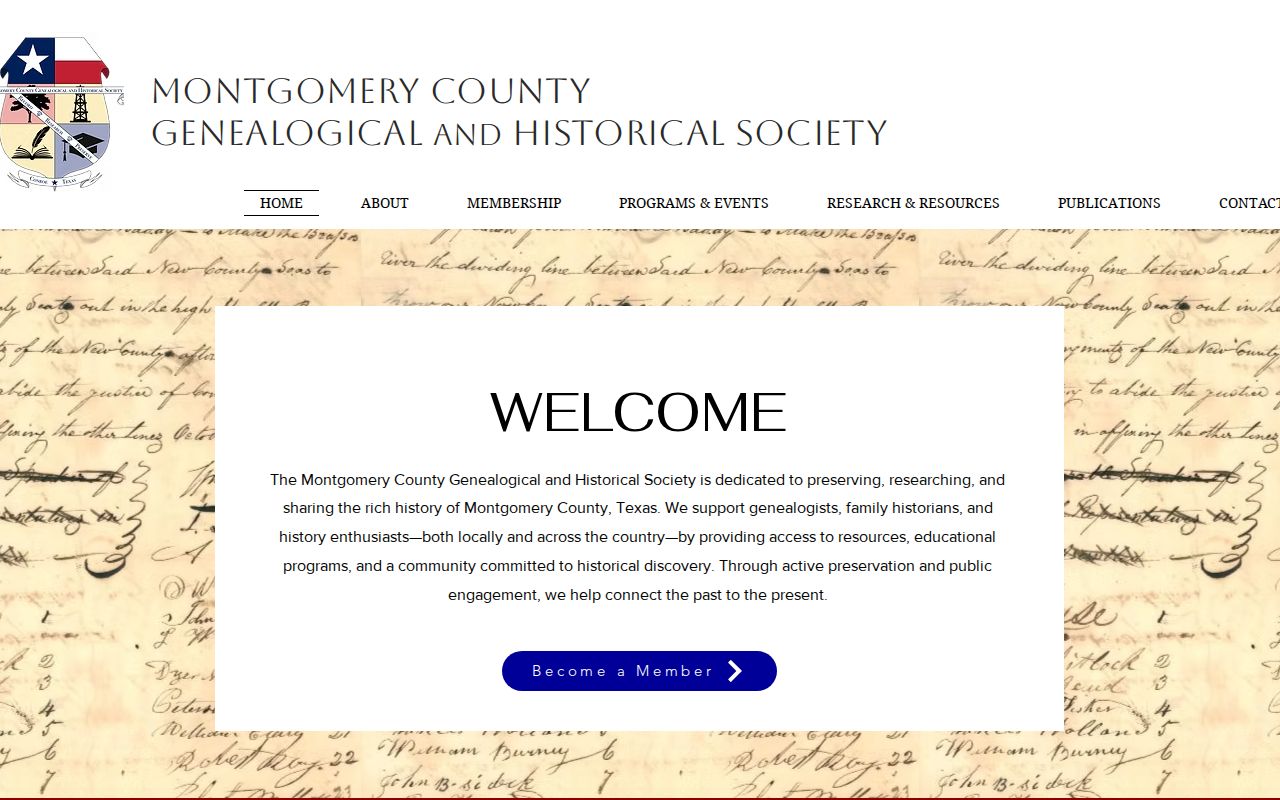
Exact catalog fields, appointment requirements, publication indexes, holdings, and fees were not located in the available source. Contact the society before relying on a presumed file or publication. It can point a researcher toward local leads, but a person or address fact should still be checked in the cited volume, county instrument, or other primary record.
Use the society as a research-contact route, not as a shortcut around the source. A useful inquiry identifies the surname, approximate years, village or subdivision, and whether the question concerns a map, cemetery context, publication, or family file. That level of detail makes it easier to distinguish an unverified lead from a documented directory page.
Village Clues Beyond Historic Books
The Woodlands’ village structure is a useful way to narrow an ambiguous record. The Township identifies Alden Bridge, Cochran’s Crossing, College Park, Creekside Park, Grogan’s Mill, Indian Springs, Panther Creek, and Sterling Ridge. A village name can be paired with a subdivision, section, covenant area, map, or parcel legal description when a directory uses “Spring” or “Conroe” as its postal label.
Creekside needs special care because it lies in Harris County even though it is part of the wider Woodlands community. The contrast between a planned community founded in 1974 and a regional directory shelf is the key local quirk: postal place names, county custody, and historical coverage do not always line up. Keep the county with every citation.