
The Woodlands Resident Lookup Records
There is no official, complete roster of The Woodlands residents. A resident lookup instead combines purpose-specific records. Voter status can confirm that a registration search reached the right county. A parcel record can identify an owner or mailing address. Court indexes may point to a case, while state vital indexes can place an event in time. Each source has a narrower meaning than a home address. Treat a result as a lead until another independent record supports the identity.
| Record | Question It Can Answer | Custodian or Portal | Access Route |
|---|---|---|---|
| Parcel and appraisal record | Owner and mailing-address context, not occupancy | MCAD Property Search and Township GIS | Online, district counter, or custodian request |
| Voter registration | Individual registration status within Montgomery County | Montgomery County voter lookup | Online status check, subject to Texas law |
| Court index | Whether a party name appears in the correct court jurisdiction | County Clerk Odyssey, District Clerk, or JP | Portal, clerk phone or counter, public-access request |
| Vital index | A historical event lead, year, county, or file reference | Texas DSHS indexes | Online instructions, email, phone, mail, or archive |
| Public civic or license record | A stated credential or public role | Texas licensing board or Township civic source | Use the named custodian's current lookup |
For a current The Woodlands resident lookup, begin with the record closest to the question. Use an address and parcel context for an ownership question. Use a case number for a court question. Use a year and county for a historical event. Creekside Park needs an added jurisdiction check because it is in Harris County, so a Montgomery-only search can miss the relevant appraisal, clerk, election, or court record.
The Woodlands Voter Lookup
The Montgomery County voter lookup is designed for an individual status check, not a general people list. The form asks for a last name, first name, and date-of-birth month, day, and year. Enter the name as known, then verify the county before drawing any conclusion. A no-match can follow a name change, a spelling difference, a suspense or cancellation status, a confidential program, or a lag while a record is updated.
| Rendered input | Use |
|---|---|
| Last Name | Primary surname field |
| First Name | Given-name field |
| Birth month, day, and year | Date inputs used with the name |
| Search | Submits the individual lookup |
The official voter-lookup screen shows those inputs and its statutory warning.
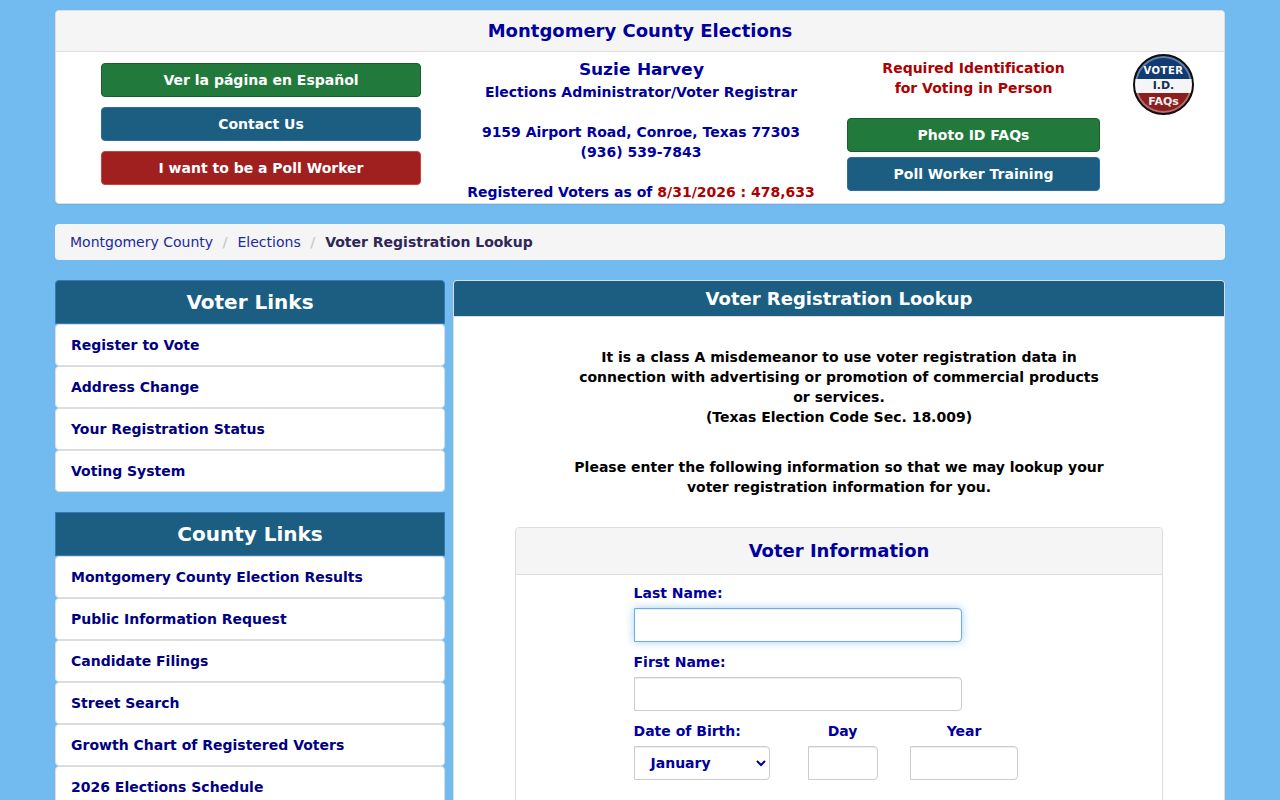
Texas Election Code §18.009 warns against using voter-registration data to advertise or promote commercial products or services. The county lookup does not establish a household relationship, and the live matched-person result fields were not captured for this research.
Note: Texas guidance treats name, date of birth, VUID, and elections voted as public only to the extent the law allows.
The Woodlands Court Routing
A court-name search must start with court level and county. Montgomery County Clerk Odyssey displayed categories for Criminal Records, Civil & Probate Case Records, and Court Calendar, but the live query timed out before the research could verify party fields, dates, result columns, images, or fees. That limitation matters. A category on the opening screen does not prove that a given name search will return a particular case.
The District Clerk Odyssey public-access screen displayed User ID, Password, sign-in controls, and a Public Access Request Form link. The public search was login-gated during inspection. District-level civil, family, and criminal matters should be routed to that clerk or its request process, rather than assumed to appear in the County Clerk interface. Justice of the Peace records are precinct-specific; JP3 displayed Criminal Records, Civil Case Records, and Court Calendar, so the property address should first be tied to the proper precinct.
The County Clerk Odyssey categories identify the county-level route, not a complete court inventory.
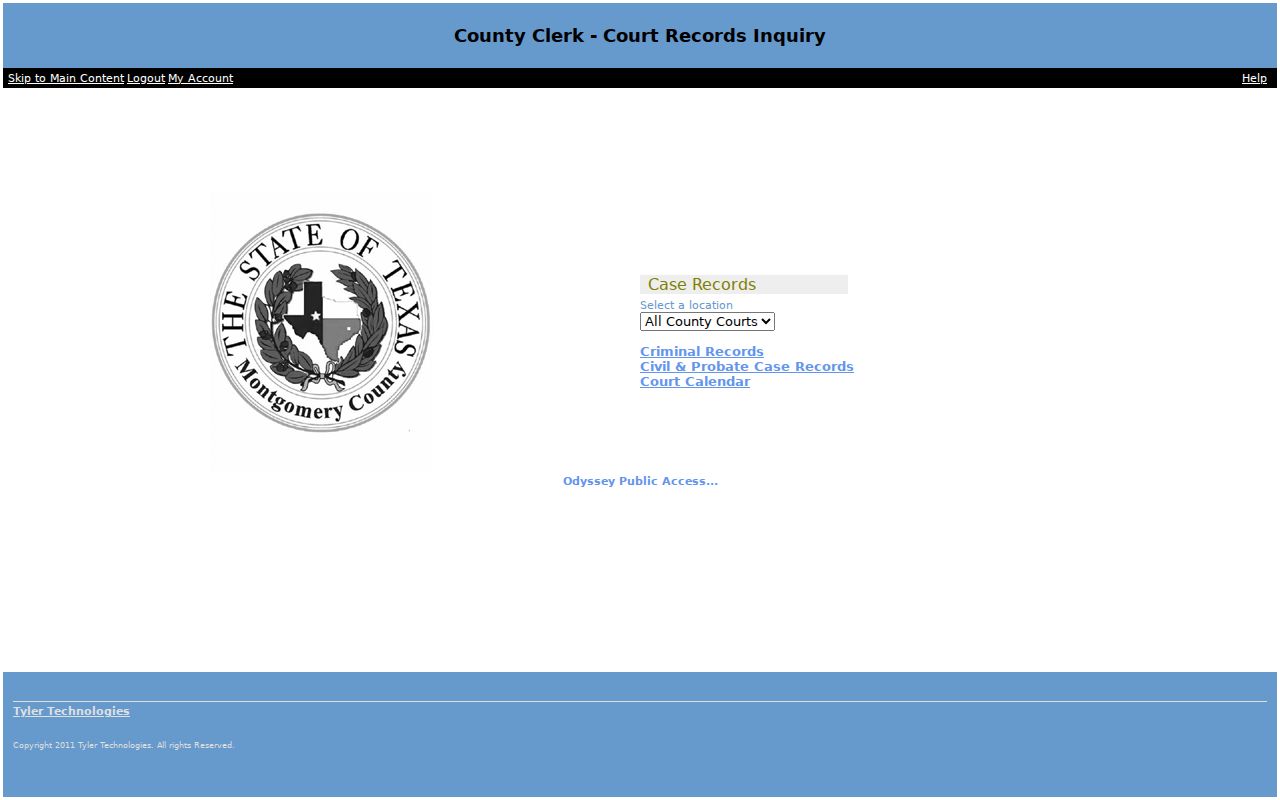
Use a clerk counter or phone channel when an online category does not answer the question. For a Creekside address, check whether the matter belongs in Harris County. For a federal matter, PACER requires an account and the proper federal court or nationwide index.
The District Clerk Odyssey access screen shows the separate public-access route.
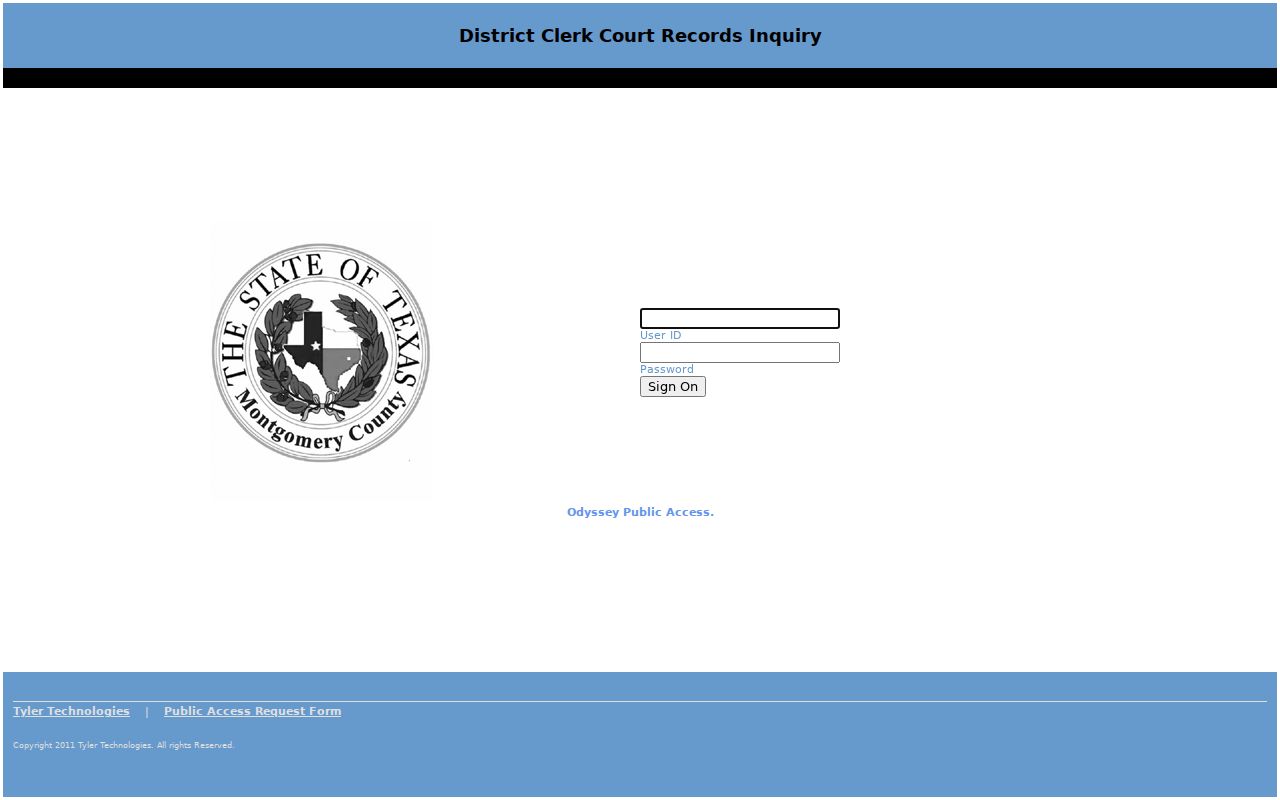
When a case is found, obtain the docket and any order from the responsible clerk. A docket is the court's running case log. It records events and filings, not a simple statement about a person's present status.
Current Status Needs a Docket
Current-custody and warrant pages are separate from a resident lookup and a court disposition. The MCSO Current Inmates entry point can lead to current-custody information, while the MCSO menu also links Recent Arrests and Outstanding Warrants. The inspected service showed access or verification behavior, so its exact field list, retention period, and pagination were not confirmed. A booking, bond, charge, or warrant must never be restated as a conviction or final judgment.
The MCSO current-custody entry point is shown below.
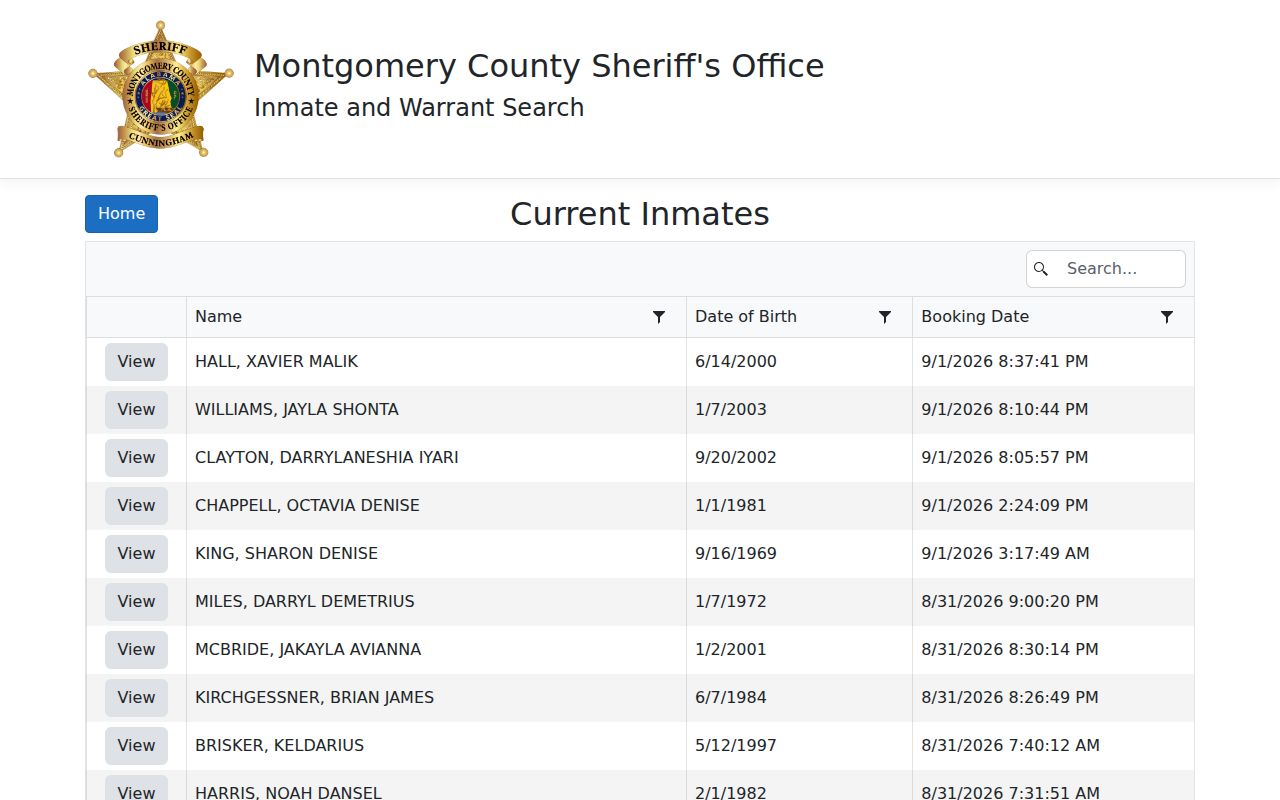
A no-result in custody, court, or voter systems is not a universal negative. Systems cover different agencies, date ranges, and status types. Confirm a legal question with the responsible court clerk and the case docket.
The Woodlands Resident Verification
Identity triangulation is the useful part of a resident lookup. Do not join records on a name alone. Preserve the source URL, access date, terms used, result count, and a record or reference number where the system provides one. Then compare at least two independent attributes, such as county, middle initial, organization, record date, parcel legal description, or court number. An old directory entry can document historical presence, but it cannot establish where someone is now.
- Write down the exact name, known county, and the type of record sought.
- Use the narrowest official index, such as a voter status search, parcel context, or a court portal for the correct court.
- Compare a second independent attribute instead of inferring identity from a shared name or ZIP code.
- Ask the actual custodian for an official or certified document only when a record requires it.
- Docket
- A court's chronological record of filings, settings, and events in one case.
- Index and image
- An index helps locate a record. An image is the underlying scanned document, which can have separate access or copy rules.
- Certified copy
- A copy issued and authenticated by the official custodian for the record type.
Property records add useful context, but an MCAD owner name or Township GIS mailing field is not evidence of current occupancy. For a full address-based record chain, use the The Woodlands streets reference after the person-level match is established.
The Woodlands Vital Indexes
Texas Department of State Health Services, or DSHS, separates index research from certified records. Its birth and death index guidance describes digital birth indexes from 1925 and death indexes from 1965, with earlier microfiche beginning in 1903. Marriage indexes generally begin in 1966, and divorce or annulment indexes generally begin in 1968. Spelling and coverage gaps can occur, so retain the exact form of a name and the county shown by an index.
Recent certificates are restricted. Texas Government Code §552.115 makes birth records public after 75 years and death records after 25 years, subject to the statute. DSHS routes qualified applicants through its applications and forms; certified marriage copies come from the county clerk, while certified divorce decrees come from the district clerk. DSHS verification letters do not replace a certifying clerk's record.
Online instructions are only one channel. DSHS also lists mail forms, phone assistance at 888-963-7111, and Austin walk-in service subject to current hours. MCMLS, TSLAC, FamilySearch where available, and the historical society can support older index work. Preserve a restricted recent record rather than seeking it through a routine open-records request.
The Woodlands Records Requests
When no portal has the needed existing Township record, Texas Public Information Act requests must be in writing under Texas Government Code Chapter 552. The Township Public Information Request page routes requests through JustFOIA and lists online, mail, email, and in-person submission. Identify the record, custodian, date range, address or parcel, and preferred format. Retain the reference number after filing.
Send the request to the office that created or holds the record. A Township request does not require MCAD, the County Clerk, Elections, or a court clerk to produce its separate records. Ask for existing nonconfidential material and segregable portions if a record has protected fields. For court records, the relevant clerk's counter, phone line, or public-access procedure is normally the better fallback.
Note: A focused request for an existing record is more useful than asking an office to research a person or create a new report.
The Woodlands Lookup Limits
Public access has limits. Texas voter guidance allows web suppression of a residence address, and other confidentiality programs can protect a voter or participant's address. Election Code §13.004(c) covers qualifying victims who make the required confidentiality request. The Texas Attorney General Address Confidentiality Program and the DPS Alternate Address Program also use substitute or business addresses for eligible participants. Do not try to reconstruct a protected residence through another source.
Do not publish full birth dates, identification numbers, victim information, private email addresses, or protected addresses. Public parcel fields and old records still require judgment. An owner is not automatically an occupant, a voter record is not a household roster, and an adjacent parcel does not establish a personal relationship. The Texas Data Privacy and Security Act provides consumer rights in circumstances the law covers, but it does not erase separate public-record and confidentiality rules.
Lawful use. Use The Woodlands resident lookup material for personal, lawful research such as family history, estate work, reconnecting, or checking an official record. Do not use any result to stalk, harass, intimidate, or harm another person.